If you’ve ever wondered what actually happens when you hand off your dental billing to an outside team, we’ve got you covered. Most dental practices assume it’s just “sending claims,” but the reality is far more intensive and far more valuable.
This article is designed specifically for dental practice owners and office managers who want to understand the full scope of services a dental insurance billing company provides. We’ll cover everything from daily claim submissions and insurance verification to denial management, payment posting, and patient billing.
Grasping what these companies do all day directly impacts your practice’s profitability and operational efficiency. By knowing how expert billing teams handle these complex tasks, you can make informed decisions about outsourcing and ultimately free your staff to focus on patient care while improving your cash flow and reducing administrative headaches.
Here’s a look inside a typical day at a dental insurance billing company and why it matters for your bottom line.
Answering Your Biggest Question: What Does a Dental Insurance Billing Company Actually Do All Day?
At 8:00 a.m., our team at Prospa Billing logs into practice management software for a 7-op practice in Dallas, TX.
By 8:15 a.m., we’re scrubbing yesterday’s procedures: checking CDT codes, verifying tooth numbers, and attaching the right radiographs to claims for crowns and scaling procedures.
At 10:30 a.m., we’re batch-submitting 47 clean insurance claims to Delta Dental, MetLife, and Cigna through the clearinghouse.
By 2:30 p.m., we’re on hold with Delta Dental of California, appealing a denied crown that should have been covered at 80%.
This is what dental insurance billing looks like when it’s done right. These tasks replace hours of front-desk and office manager work each day. Instead of your receptionist toggling between patient check-ins and payer portals, a dedicated dental insurance billing company with an experienced team of dental billing specialists handles the complexity so your team can focus on patient care and chair fill.
Prospa Billing focuses specifically on U.S. independent dental practices and small groups. We handle both the daily volume of routine claims and the messy backlogs that accumulate when billing falls behind, turning aging receivables into collected revenue with proven dental insurance billing services.
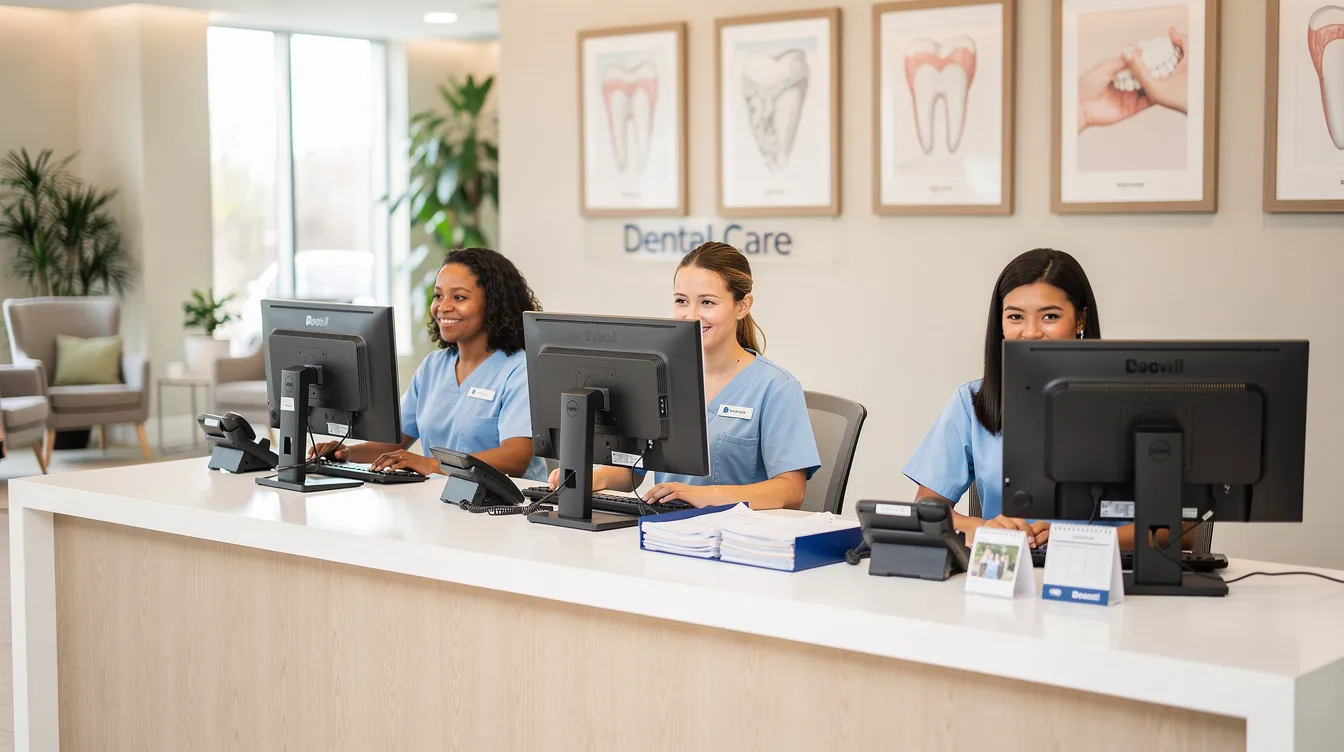
Core daily responsibilities of a dental billing company:
For many practices, understanding the nuances of dental billing and CDT coding is the first step toward seeing how much time and revenue a specialized billing team can protect.
- Insurance verification and benefit confirmation
- Claim scrubbing and electronic submission
- Accounts receivable follow-up and aging management
- Denial and rejection resolution with appeals
- Payment posting and deposit reconciliation
- Patient billing and statement management
Morning: Verifying Benefits and Getting Claims Out the Door Fast
The day typically starts between 7:30 and 9:00 a.m. local practice time. Our dental billers log into your practice management software (whether that’s Dentrix, Eaglesoft, Open Dental, or Dentrix Ascend) and begin pulling up payer portals for eligibility checks.
Dental insurance verification for same-day patients gets finalized each morning, while pre-treatment estimates for scheduled procedures were often handled the day before. The goal is zero surprises at checkout by confirming insurance policy details upfront.
Morning tasks include:
- Running eligibility checks for major insurance companies like Delta Dental, MetLife, Cigna, UnitedHealthcare Dental, and Aetna
- Confirming remaining annual maximums (typically $1,000–$2,000 for PPO plans), deductibles ($50–$100), and frequency limits
- Verifying coverage for specific dental procedures like D2740 crowns, D4341 scaling and root planing, and D4381 localized antimicrobial delivery
- Scrubbing previous day’s procedures for coding accuracy: CDT codes, modifiers, tooth numbers, quadrants, narratives, and supporting attachments like periapical radiographs and perio charting
- Batch-submitting clean dental claims electronically through clearinghouses before midday cutoffs to ensure timely payments
Here’s where the billing process gets granular: A PPO plan might require a written narrative justifying a D2950 core build-up beyond routine decay. Without that narrative, the claim gets denied. A dental billing company catches these details before submission, reducing claim denials and improving client satisfaction.
Why morning accuracy matters:
- Claims submitted clean by midday often pay within the same week
- Initial denial rates drop from 15–20% to under 5% with proper scrubbing
- Your cash flow becomes predictable instead of sporadic
Midday: Working the Aging Report and Chasing Unpaid Insurance Money
Late morning into afternoon shifts focus to accounts receivable management. This is where a dental insurance billing company earns its keep: chasing down every dollar of unpaid insurance payments before they age into write-offs.
Our team pulls detailed aging reports segmented by payer and by bucket: 0–30 days, 31–60 days, 61–90 days, and the dreaded 90+ days. For a healthy dental practice, 70–80% of insurance AR should sit in the 0–30 day bucket, with 90+ days representing under 10% of total insurance AR.
Daily AR tasks include:
- Calling or using online chat with carriers like Blue Cross Blue Shield, Guardian, Principal, Humana, and United Concordia
- Checking claim status for anything over 21–30 days old
- Identifying common delay reasons: missing x-rays, coordination of benefits errors, terminated subscribers, or maxed benefits
- Updating claim notes directly in your practice management software so your office manager can see status without calling the insurer
- Prioritizing high-dollar claims and anything approaching 60+ days
Companies like Prospa Billing set internal benchmarks and work daily toward them. For example, we transformed a $48,000 backlog of 90+ day AR in a 4-op Arizona practice into under $10,000 within 120 days through consistent daily follow-up. That’s dental practice revenue recovered instead of written off.
Afternoon: Fixing Denials, Rejections, and Underpayments
A significant portion of each afternoon goes to denial management, correcting issues once payers respond with denied claims, rejections, or underpayments. This tedious work requires expertise in dental claim support that most dental offices simply don’t have bandwidth to handle properly.
Types of problems handled daily:
| Issue Type | Common Causes | Resolution Approach |
|---|---|---|
| Clearinghouse rejections | Invalid subscriber ID, plan changes, formatting errors | Correct data and resubmit same day |
| Clinical denials | Missing documentation (periapicals for endo, bitewings for composites, perio charts for D4341/D4342) | Gather attachments and resubmit with narrative |
| Bundling/downcoding | D1110 prophy paid as D1120 child prophy, crown downgraded to amalgam | Appeal with fee schedule and CDT guidelines |
| Underpayments | Payer not following PPO contract rates | Compare to contracted fees and request adjustment |
A billing specialist reviews EOBs and ERA files line by line to identify incorrect denials or payment amounts. Appeals get drafted with specific narratives, documentation, and references to insurance policy or CDT guidelines. Each appealed claim gets tracked with scheduled follow-ups every 10 business days until resolution.
Why this matters for your practice:
- Dental professionals rarely have time to pursue appeals at this level of detail
- Without follow-through, 20–40% of recoverable denied claims get abandoned
- A dedicated dental insurance billing company has the industry expertise to know which denials are worth fighting

All Day: Posting Payments, Reconciling Deposits, and Cleaning Up the Ledger
Payment posting and reconciliation run continuously throughout the day as ERAs and EOBs arrive from multiple payers. This ongoing work keeps your financial health visible and accurate.
Technical activities include:
- Downloading ERAs from payer portals and clearinghouses for insurers like Humana, United Concordia, and state Medicaid plans
- Posting insurance payments into practice software at the procedure level (not lump sums), including adjustments for PPO write-offs and contractual allowances
- Recording EFT and virtual card payments to match daily bank deposits and merchant statements
- Flagging unpaid line items or zero-paid dental codes that should have coverage
- Identifying systematic issues like recurring underpayment of D2740 or non-recognition of new 2025/2026 CDT code updates
We prepare daily or weekly summaries showing production vs. collections, collection ratio, and insurance vs. patient mix. One practice saw their insurance collection rate improve from 86% to 97% within six months of working with a dental insurance billing company.
A clean ledger directly supports financial stability, helping with tax planning, expansion decisions, and lender conversations. Your dental business deserves clear numbers, not guesswork.
Patient Billing, Statements, and Tough Conversations Your Team Can Avoid
Many dental offices dread patient balance conversations. An outsourced dental insurance billing company handles a significant portion of this work, preserving front-desk relationships and keeping your team focused on scheduling through streamlined patient billing and statement services.
Patient-facing tasks performed:
- Generating monthly or bi-monthly patient statements via mail, email, or text for balances after insurance pays
- Setting up payment plans within your guidelines (e.g., 3–6 month plans for balances over $500) and documenting agreements
- Answering patient questions about EOBs, deductibles, and co-insurance so receptionists spend less time explaining insurance details
All patient communication follows HIPAA compliance protocols: no PHI in insecure email, verified identity over phone, and proper documentation.
Example scenarios we handle:
- Calling a patient in Chicago to clarify why a D8080 orthodontic claim left a $1,200 balance due to lifetime maximums
- Helping a retiree in Texas understand why their Medicare Advantage plan didn’t cover a specific prosthodontic service
Benefits of offloading patient billing:
- Preserves front-desk relationships with patients
- Reduces administrative burden on your team member handling calls
- Improves client satisfaction through clear, professional communication
Technology, Compliance, and Reporting Running Quietly in the Background
In parallel with daily billing tasks, a dental insurance billing company invests significant time in technology, regulatory compliance, and analytics that individual dental practices rarely have bandwidth to manage. This background work keeps everything running smoothly.
Tech responsibilities:
- Maintaining secure integrations with practice management software (Dentrix, Dentrix Ascend, Eaglesoft, Open Dental, Curve)
- Monitoring clearinghouse performance and payer portal outages, rerouting claims if needed
- Updating internal crosswalks when payers change policies or adopt new CDT codes (2025/2026 updates)
- Keeping billing software and electronic health records connections up to date
Compliance activities:
- Enforcing HIPAA compliance with role-based access and secure password management
- Conducting periodic internal audits on documentation and coding accuracy for high-risk procedures (implants, sleep appliances billed to medical insurance companies)
- Ensuring Business Associate Agreements (BAAs) are in place with each client and that data systems protect patient data
Analytics and reporting:
- Building monthly reports showing KPIs: days in AR (targeting under 35), percentage over 90 days (targeting under 10%), production vs. collections, denial rates by payer (targeting below 5%)
- Providing quarterly review calls with practice owners to discuss trends, seasonal patterns, and operational efficiency opportunities
This ongoing training and monitoring ensures your dental practice management and revenue cycle management stay optimized even as the dental industry evolves, backed by a billing partner dedicated to enhancing dental practice profitability.
A Typical Day Partnering With Your Practice
Prospa Billing is a specialized U.S.-based dental and medical billing partner, founded in 2011 in Cheshire, Connecticut. We serve independent dental practices and small groups across the country, delivering the outsourced dental billing services offered throughout this article so your team doesn’t have to.
What partnership looks like:
| Phase | Timeline | Activities |
|---|---|---|
| Onboarding | First 30–60 days | Software access setup, AR cleanup plan, carrier mapping, workflow integration |
| Ongoing | Daily/Weekly | Claim submission, AR follow-up, denial analysis, owner check-ins |
| Long-term | Monthly/Quarterly | Monthly reports, trend analysis, strategic recommendations |
Services we provide:
- Insurance claim submission and full follow-up until paid or legitimately written off
- Insurance and patient payment posting with reconciliation to bank deposits
- Denial management and appeals, including dental medical billing for sleep apnea appliances, oral surgery, and trauma cases
- Streamline operations through consistent billing procedures and deep understanding of payer requirements
Over a decade of experience has taught us how to reduce 90+ day AR and clean up legacy backlogs for practices that previously tried to handle billing in-house. We work with solo GP offices, specialty practices in periodontics, orthodontics, oral surgery billing practices, and pediatric dentistry, as well as multi-location practices and DSOs.
Ready to get paid faster and reduce your administrative tasks?
If you’re ready to explore a partnership, you can contact Prospa Billing for a complimentary consultation to review your current billing process and goals.
- Schedule a short discovery call to discuss your billing challenges and see how Prospa Billing’s medical and dental billing outsourcing can fit your practice
- Request a free AR review to see where money is sitting uncollected and whether comprehensive medical and dental billing outsourcing could improve your collections
- Learn how Prospa Billing compares to the best dental billing companies and ez dental billing solutions
Everything described in this article (claim processing, denial appeals, payment posting, patient billing) is what we do daily so your front desk, office manager, and dental support specialties can focus on what matters: filling chairs and delivering excellent patient care. If your cash flow needs help, let’s talk.
Frequently Asked Questions About Dental Insurance Billing Companies
What does a dental insurance billing company do to ensure prompt payments?
A dental insurance billing company proactively submits clean claims daily with accurate CDT codes and necessary attachments. They follow up on unpaid claims, verify insurance eligibility and benefits, and appeal denied or underpaid claims with detailed documentation. This proactive dental claims submission and follow-up is crucial for the financial stability of a practice, ensuring timely payments and reducing errors, similar to how a focused medical billing assessment can uncover revenue opportunities and process gaps.
How do dental billing companies handle denied claims?
Billing specialists analyze the reasons for denials, draft appeal letters with supporting evidence such as clinical notes or radiographs, and resubmit claims promptly. Effective appeal of denied claims helps dental practices recover revenue that might otherwise be lost, reducing accounts receivable issues.
What services are included in revenue cycle management by dental billing companies?
Dental billing companies manage the entire revenue cycle, including insurance verification, claim submission, payment posting, denial management, and accounts receivable monitoring. They ensure compliance with HIPAA and insurance regulations while using technology to streamline processes and improve cash flow.
How can outsourcing dental billing benefit a dental practice?
Outsourcing dental billing can significantly improve cash flow by ensuring timely and accurate claim submissions, reducing denials and delays. It alleviates administrative burdens on staff, allowing them to focus more on patient care. Practices that outsource often see reduced accounts receivable aging and improved financial stability.
What are some common challenges in dental billing that dental insurance billing companies address?
Common challenges include coding errors, billing complexities, insurance denials, and eligibility verification. Approximately 80% of dental practices face financial concerns due to these issues. Dental billing companies help reduce these challenges by providing expert coding, proactive claim submission, and thorough follow-up.
How do dental billing companies ensure compliance and security?
They enforce HIPAA compliance through role-based access controls, secure password management, and maintaining Business Associate Agreements (BAAs) with clients. Periodic audits of documentation and coding accuracy are conducted to protect patient data and ensure regulatory compliance.
What role does technology play in modern dental billing companies?
Top dental billing companies utilize advanced technology to automate claim scrubbing, verify insurance eligibility, monitor clearinghouse performance, and integrate with various practice management software. This technology reduces errors, accelerates payments, and enhances reporting and analytics.
How should a dental practice select a dental insurance billing company?
Consider factors such as the company’s years of experience, number of employees, range of services offered, pricing structure, and customer reviews. Evaluating these criteria helps ensure the company is a good fit for the practice’s current and future needs.
Can dental billing companies handle complex dental services and procedures?
Yes, many dental billing companies specialize in handling a wide range of dental services, including orthodontics, oral surgery, sleep apnea appliances, and trauma cases. They ensure proper coding and claim submission to maximize reimbursements.
What impact does dental billing outsourcing have on patient satisfaction?
By managing insurance claims and patient billing professionally, dental billing companies reduce front-desk workload and improve communication clarity. This leads to fewer billing-related patient disputes and enhances overall patient satisfaction.
Are there cost benefits to outsourcing dental billing?
Outsourcing can reduce billing-related expenses by up to 35%, lowering overhead costs associated with eligibility verification, claim processing, and denial management.
How do dental billing companies manage payment posting?
They post insurance and patient payments at the procedure level, reconcile electronic remittance advices (ERAs) and explanations of benefits (EOBs), and identify underpayments or zero-paid services for further action.
What is the typical timeline for managing accounts receivable (AR) in dental billing?
Dental billing companies monitor AR aging reports closely, aiming to keep 70–80% of insurance AR within 0–30 days and under 10% over 90 days. They prioritize follow-up on claims aging beyond 30 days to reduce write-offs and improve cash flow.
How do dental billing companies stay updated with regulatory and coding changes?
They continuously update internal code crosswalks and software to reflect new CDT codes and payer policy changes, ensuring claims are compliant and accurate.
What is the importance of clean claims in dental billing?
Clean claims, typically submitted electronically through clearinghouses, are free of errors and complete with necessary documentation. Submitting clean claims reduces rejections and speeds up payment cycles, improving the practice’s financial health.


0 Comments