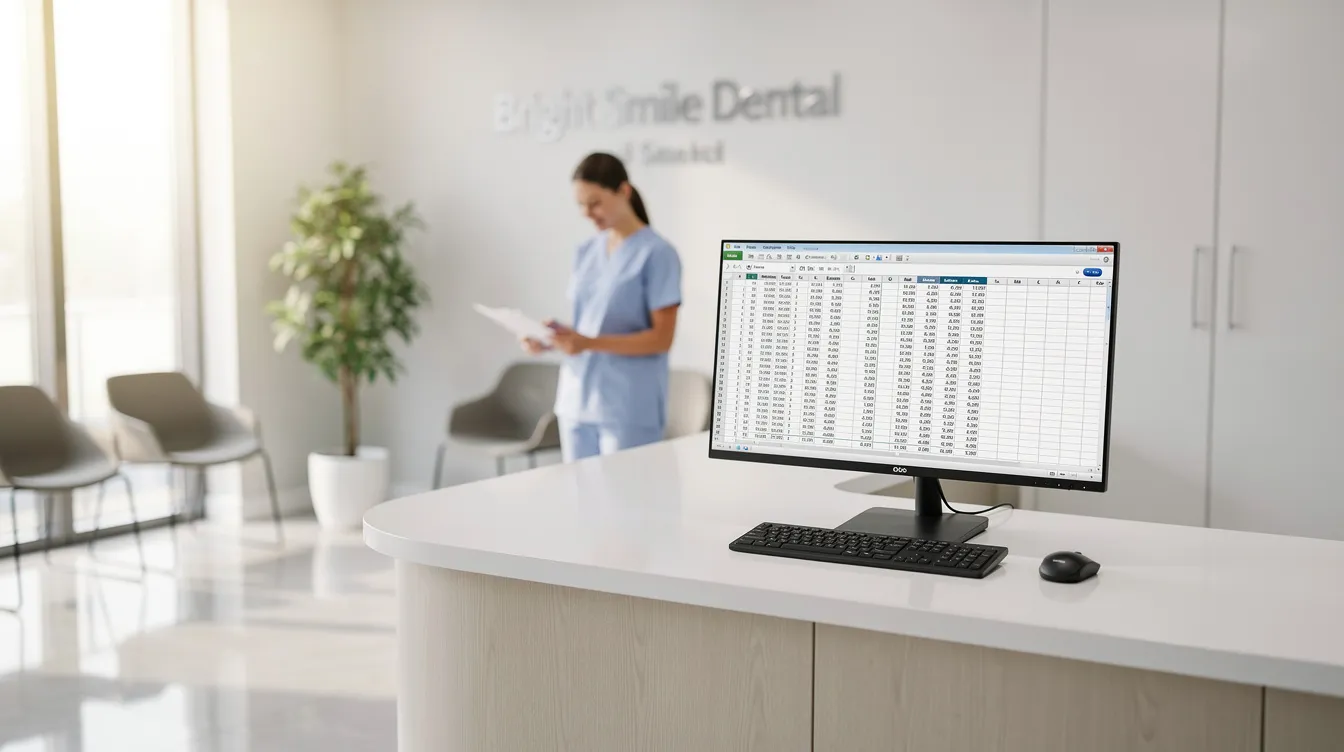
If your dental office hasn’t looked at its billing numbers since January, you’re not alone-but you are at risk. The first half of the year is where patterns form: write-offs creep up, denied claims pile up, and AR aging buckets quietly slide past 60 and 90 days. Left uncorrected, these become forced write-offs in Q4 when timely filing windows close and cash flow tightens.
This article walks you through a practical, timed 60-minute working session you can do with your team right now. The dental billing process typically follows a five-step lifecycle-from insurance verification through payment posting-and an efficient billing process leads to higher revenue when each step is optimized. Common mid-year red flags include rising adjustment totals, unpaid claims aging beyond recovery, and denial rates that have climbed to roughly 15% on average in 2025-2026.
At Prospa Billing, we specialize in dental billing and medical billing for dentists, and we’ve seen practices reclaim tens of thousands before Q4 simply by running this review. Below, bolded time stamps guide each segment so you can follow along at a glance.
0–10 Minutes: Pull Your Core Billing Dental & Collections Reports
The first 10 minutes are strictly about data gathering-no analysis yet. Open your practice management software (Dentrix, Eaglesoft, Open Dental, or similar) and run the following reports for January 1 through June 30 of the current year:
- Production by provider – total services performed, broken down by CDT procedure codes
- Collections by provider – insurance payments vs. patient payments received
- Adjustments/write-offs by type – categorized by reason code (contractual, courtesy, timely filing, etc.)
- AR aging report – insurance AR and patient AR in standard aging buckets
- Outstanding claims report – open dental and medical insurance claims
- Payment posting logs – when payments were posted and any batch backlogs
Save each report as both a PDF and an Excel/CSV export. Label them consistently (e.g., “AR_Aging_Jan1–Jun30_2026”) because you’ll compare these same reports in Q4. After treatment, a claim is submitted electronically using standard CDT procedure codes, so your production reports should align closely with your claims data. Clinics may use CDT codes to describe dental procedures and treatments-verify these codes match your current fee schedule.
0–20 Minutes: Spot Patterns in Adjustments and Write‑Offs
Write-offs and adjustments quietly erode profitability when no one reviews them mid-year. Errors are common in dental bills, with up to 70% containing at least one error-and those errors translate directly into lost revenue or unnecessary adjustments.
Sort your adjustments by reason code for January through June 2026. Key categories to examine:
- PPO contractual write-offs
- Professional courtesy discounts
- Small-balance write-offs
- Timely filing failures
- Non-covered dental services
Now compare total write-offs as a percentage of gross production to the same period last year. For example, if your practice produced $1M in the first half of 2025 and wrote off $50,000 (5%), but 2026 shows $80,000 on the same production (8%), that 3-point jump demands attention.
Red flags to watch: frequent “timely filing” write-offs (a workflow breakdown), repeated “non-covered service” codes for procedures you regularly perform, and PPO over-discounts where you accepted less than your contracted rate without follow-up. Dental insurance billing can also be complicated by patient insurance changes mid-year-check whether coverage shifts are behind denial spikes.
Create a short list of 3–5 write-off types that increased by more than 2% of production. These become your priority action items.
20–35 Minutes: Review Unpaid Claims, Denials, and Medical Bill Opportunities
This is where you dig into unpaid claims and identify missed opportunities to bill medical insurance for dental procedures. Open your outstanding claims report and filter by insurance type (dental coverage vs. medical insurance) and aging buckets (0–30, 31–60, 61–90, 91+ days).
Select your top 20 highest-value unpaid claims since January 2026. For each, note the payer, denial reason, and whether documentation was submitted. Typical denial reasons include:
- Missing or incomplete documentation
- Incorrect CDT, ICD-10, or CPT medical codes
- Lack of pre-authorization
- Coordination of benefits failures
- “Not medically necessary” determinations
Insurance verification determines deductibles and coinsurance rates before an appointment, yet verification errors cause roughly 42% of all dental claim denials. Most dental plans have annual maximum limits on their contribution for procedures, and dental coverage typically operates on a “100-80-50” structure for payment responsibilities-preventive services are often covered at nearly 100% by dental insurance plans, while major work drops to 50%. Understanding these limitations before scheduling prevents billing errors downstream.
Importantly, flag clinical cases where a medical bill was never attempted. Sleep apnea appliances billed through medical insurance (HCPCS E0486) can reimburse $1,200–$2,500 versus dental plan maximums of $0–$500. Trauma, biopsies, TMJ, and pre-radiation clearance are also candidates. Medical claim forms are essential for dental insurance billing when crossing into medical territory. Research shows that 80% of medical bills contain errors-so a thorough medical bill review on cross-billed cases is critical before submission.
The bill review process can deliver significant cost savings: Zurich’s bill review process, for example, saves an average of 63% off annual billed charges, illustrating how systematic review delivers outcomes that far exceed the investment of time.
35–45 Minutes: Audit Your AR Aging and Patient Balances
Aging accounts receivable past 60–90 days in the first half of the year will become year-end write-offs if not corrected now. A streamlined revenue cycle improves cash flow consistency, so catching AR problems mid-year is essential.
Examine your AR aging report as of June 30, 2026. Calculate the percentage of AR in each bucket, specifically focusing on 61–90 and 91+ days. Segment AR by payer type:
| AR Category | What to Look For |
|---|---|
| Insurance balances 90+ days | Unworked denials, missing appeals, payer delays |
| Patient balances 60+ days | Weak financial agreements, confusing statements |
| Small balances under $25 | Administrative drag with minimal return |
Identify the top 25 largest patient balances and top 25 oldest insurance balances. An Explanation of Benefits (EOB) details what services were covered by insurance-cross-reference EOBs against posted payments to catch underpayments from payers or third party administrators.
Dental practices should optimize both insurance and patient billing. Estimated copays are often collected on the day of service to manage costs, and a transparent billing process improves patient payment rates. Conversely, poor billing experiences can lead to lost patient goodwill-patients who receive confusing statements or surprise pocket charges are less likely to return. Transparent billing increases patient payment likelihood across the board.

45–55 Minutes: Evaluate Your Internal Billing Workflow and Technology
Now tie the patterns you’ve found back to your internal workflow. Map how a claim currently moves from clinical note to paid:
- Clinical documentation – assistants and hygienists record procedures and diagnoses
- Front desk verification – eligibility, benefits, and dental benefits confirmed
- Claim submission – biller codes and submits via clearinghouse
- Payment posting – EOBs processed, adjustments applied
- Follow-up – denials appealed, patient statements sent
Common friction points include incomplete clinical documentation (missing surface counts or diagnoses), inconsistent use of diagnostic codes for medical billing, no standardized schedule for claim follow-up, and manual processes that advanced technology could automate. Using technology can optimize the dental billing process-automated billing reduces administrative burdens in practices and can drop denial rates from 11.8% (manual verification) to 3.2% (automated).
Check whether your system and clearinghouse tools are fully utilized: electronic attachments, automated eligibility checks, denial tracking dashboards, and compliance reporting. Outsourced partners like Prospa Billing can plug into your existing software to handle claim submission, payment posting, denial appeals, and AR follow-up-all while maintaining HIPAA compliance and delivering the expertise and accuracy your practice needs. The dental billing process includes insurance and patient billing, and having a professional team navigate both with depth means fewer billing errors reaching payers.
55–60 Minutes: Create a 90‑Day Action Plan (and When to Call Prospa Billing)
You’ve spent 55 minutes gathering insights-now turn them into a strategy. Choose 3–5 priority projects for July through September 2026:
- Reduce 90+ day insurance AR by a specific percentage (e.g., 30%)
- Eliminate timely filing write-offs entirely through weekly claims review
- Launch medical insurance billing for sleep apnea, TMJ, or trauma cases
- Educate and train staff on CDT-2026 code changes to reduce coding denials
- Streamline patient billing statements for transparency and faster payment
Assign an owner and due date for each item. Schedule a follow-up bill review in early October 2026 to measure progress before Q4. Bookmark this article so your team can repeat the process.
The fully loaded cost of working a single denial is estimated at 4–5× the claim’s face value. A $400 denied crown can cost $1,600 in staff time and lost opportunity. That math should give you confidence to act now.
When does partnering with Prospa Billing make sense? Consider it if your practice faces chronic denial rates above 10%, your in-house team lacks bandwidth or medical bill review expertise, you’re missing cross-billing opportunities, or you can’t keep up with evolving regulations and code updates. An efficient dental billing process leads to higher revenue-and sometimes the most efficient solution is bringing in a dedicated partner.
The 60 minutes you invest today can protect tens of thousands in revenue before year-end. Don’t wait until December to discover what you could have collected in July. Contact Prospa Billing to schedule a brief consultation, review your mid-year numbers, and design a tailored revenue cycle management solution that maximizes every dollar your providers produce. Drop your comments or questions-we’re ready to talk.



0 Comments