High-value procedures are where most revenue leaks hide. If your practice performs root canal therapy, apicoectomies, dental implants, wisdom teeth extractions, IV sedation, or bone grafting, every coding slip or missing attachment can cost thousands per claim. Dental coding is crucial for accurate billing and insurance processing, and dental billing involves both insurance claims submission and patient billing across every case your office touches.
Answering Your Biggest Question: How Do I Stop Revenue Leaks in Endo & OMS Billing?
Revenue cycle management optimizes the financial health of healthcare practices, yet independent dental practices often experience high insurance denials that quietly erode production. An average practice can lose 10–15% of gross production annually to billing inefficiencies. For a two-doctor office producing $800,000 a year, that equals $80,000–$120,000 in earned-but-not-collected revenue.
Prospa Billing is a U.S.-based outsourced dental insurance billing partner built for specialty providers. We focus on endodontic billing, oral surgery billing, medical billing crossover, denial appeals, insurance verification, and detailed reporting for practices across the country, including those in utah and beyond. This article walks through concrete coding pitfalls and specialist-ready workflows that protect reimbursement from the first phone call through AR follow-up. Every section is written for owners and managers of endodontic practices and oral surgery dental centers, not for patients.
Know the High-Value Procedures That Drive Your Revenue
Each procedure below carries strict documentation and medical-necessity rules. Miss them, and you face partial write-offs, bundling, or outright denials.
- Endodontics: D3310–D3330 (root canal by tooth type), D3346–D3348 (retreatment), D3410–D3426 (apicoectomy/periradicular surgery), D3331/D3332 (incomplete treatment or obstruction)
- Oral surgery: D7140, D7210, D7230, D7240 (extractions from simple to complete bony impactions), D6010/D6058 (implant body and implant-supported prosthetics), bone grafting, sinus lifts, IV sedation codes
Prospa Billing builds custom fee schedules and code libraries for each practice, aligned with their procedure mix and payer contracts, so every provider and their assistants work from the same playbook.
Coding Pitfalls in Endodontic Billing (Root Canals, Retreatment, and Surgery)
A general dentist may refer a patient experiencing tooth pain to your office for emergency evaluation. When the doctor documents the limited exam (D0140) and periapical x rays (D0220, D0230), the chief complaint and diagnostic findings about the dental pulp must appear in chart notes, or the claim stalls. A specific CDT code exists for incomplete root canals (D3331/D3332), and insurance may deny obstructed canal claims without sufficient documentation such as mid-treatment radiographs.
Root canal retreatments are subject to frequency limitations by insurers. Failing to verify benefit history before scheduling D3346–D3348 causes preventable denials. For surgical endodontics like apicoectomy, an absent narrative about lesion size, persistent infection, or swelling after failed nonsurgical therapy leads to the same outcome. Prospa Billing uses specialty-trained coders who review x rays, narratives, and chart notes before claim submission, diagnosing coding mismatches before they reach payers.
Tooth Numbers, Surfaces, and Site-Specific Detail
Insurers deny or delay claims when tooth numbers are inconsistent between chart, claim, and ray images. Every endodontic claim must clearly document the tooth number, surfaces, and whether treatment is initial or retreatment, with identical information on the ADA claim and clinical note. Our workflow includes reconciliation of tooth numbers against the treatment plan and ledger before claims go out.
Coding Pitfalls in Oral Surgery Billing (Implants, Wisdom Teeth, and Grafts)
Oral and maxillofacial surgery focuses on the mouth, jaws, and face, making its billing complex. Tooth extractions can include simple and complex surgical procedures, and using the wrong extraction code for soft tissue versus partially bony versus completely bony impactions is a common and costly misstep. Wisdom teeth removal is a common oral surgery procedure, yet many practices fail to document difficulty level or attach diagnosis codes establishing medical necessity.
Dental implants replace missing teeth with natural-looking results, but billing only D6010 without associated grafting or membrane codes leaves revenue on the table. Bone grafting and sinus lift codes bundled into implant placement without separate narratives on ridge deficiency represent silent leaks. Sedation options may be available for various oral surgery procedures, and under-reporting IV sedation time or omitting pre-op assessment documentation triggers payer reductions. Prospa Billing helps billings oral surgery practices and every dental implant center standardize CDT/ICD-10 coding so each surgical step is captured correctly.
Medical vs Dental for Oral Surgery Cases
Medical billing is appropriate when cases involve facial trauma, jaw fractures, infection spreading beyond tooth structures, or extractions before radiation therapy. Using only dental codes when CPT/ICD-10 codes are required, or not sending operative notes and radiology reports, causes denials. Prospa Billing supports dual-path workflows, routing eligible care to medical payers while sending restorative services to dental plans, so the oral surgeon and practice maximize reimbursement.
Documentation Essentials: Narratives, X-Rays, and Clinical Notes
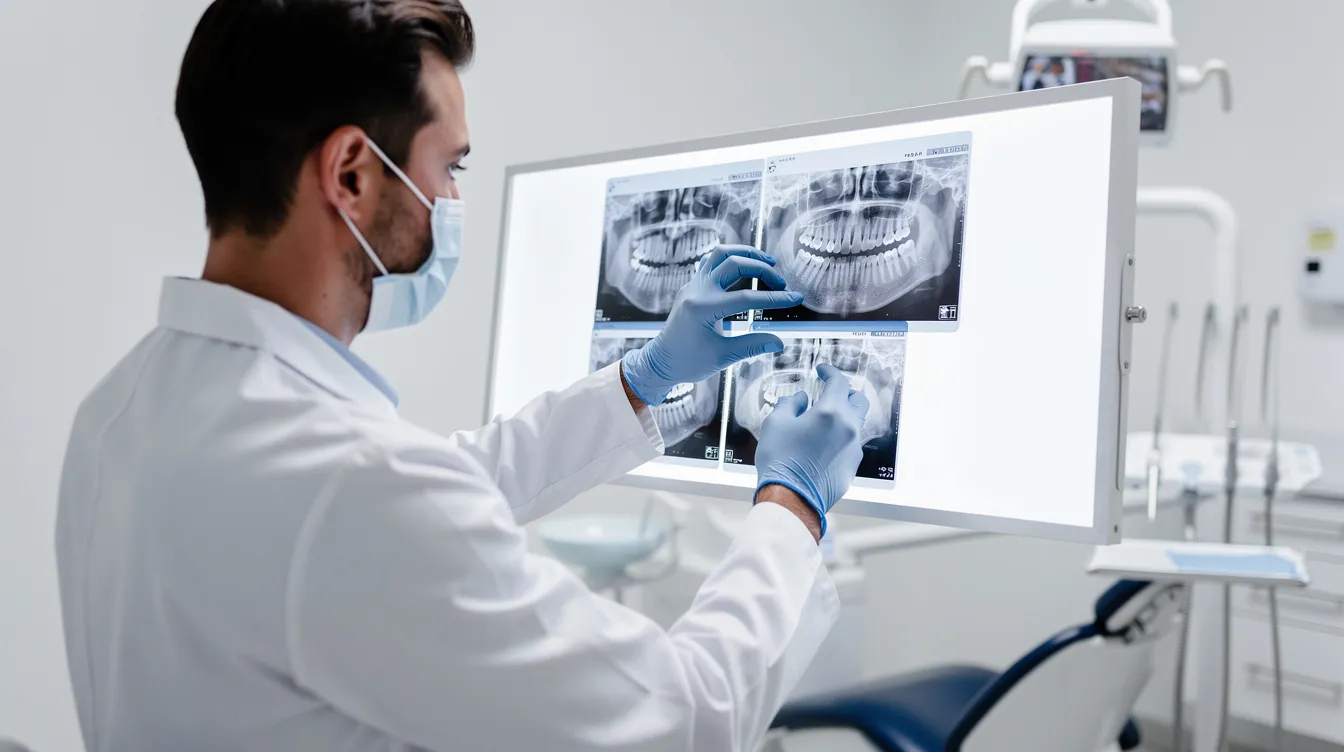
High-value claims live or die by documentation. A strong narrative must explain the diagnosis, symptoms such as pain, swelling, or infection, prior treatment history, radiographic findings, and why the chosen procedure is necessary now. Endodontic billing requires three periapical x rays for claims: pre-op, working length/intra-op, and post-op, each showing the entire root and periapical area with proper labeling.
For oral surgery, panoramic or CBCT scans are required for dental implants and wisdom teeth cases. Missing or low-quality attachments are a primary reason high-fee claims are downgraded. Prospa Billing uses standard narrative templates and attachment checklists customized by payer so staff consistently attach the correct documentation the first time.
Audit-Ready Charting That Supports Coding
Chart notes must support billed codes on the same date of service: diagnosis, procedure steps, sedation details, complications, and post-op instructions. Insurance auditors increasingly request records for high-fee procedures, and incomplete notes trigger recoupments. Quarterly internal audits using random samples help determine whether charting matches claims and payments, a safety net every specialty practice needs.
Insurance Verification Workflows Built for Endodontic and OMS Practices
Accurate insurance verification reduces claim denials and improves revenue. Accurate insurance verification before treatment reduces claim denials, making it the first line of defense. Endodontic practices often require urgent insurance verification for emergency visits when a patient arrives in pain needing same day treatment.
For endodontic visits, verify major versus basic benefit levels, root canal frequency limits, waiting periods, and retreatment coverage. For oral surgery and dental implant centers, confirm implant exclusions, bone graft benefits, wisdom teeth extraction coverage, anesthesia benefits, and pre-authorization requirements. Collecting estimated co-pays upfront enhances revenue management and prevents surprise balances for the patient and their family. Prospa Billing verifies eligibility through live callers and payer portals, returning clear estimates so the practice can discuss costs with patients before the visit, closing many of the gaps where general dental billing workflows commonly lose money. Once verification successful, the data is logged for downstream claim accuracy. We also run a security verification review of each patient’s portal access, ensuring that security service protocols and protection from malicious bots on the practice website are maintained, so the respond ray id and bot traffic do not compromise patient data.
Coordination of Benefits and Secondary Insurance
Incorrect primary/secondary order or unreported other coverage causes denials on complex cases. Prospa Billing verifies COB status, documents it in the practice management software, and routes claims in the correct sequence. Including COB explanations in patient financial discussions is essential for high-dollar implant or multi-tooth endodontic treatment plans.
Specialist-Ready Billing Workflows That Protect Reimbursement
Dental practice management software aids in workflow integration, and patient billing is part of the overall dental revenue cycle management process. Revenue cycle management helps improve cash flow for dental practices when the workflow is specialty-tuned. Timely claim submission minimizes delays in reimbursement for dental practices.
An ideal workflow includes:
- Pre-visit insurance verification with benefit breakdown
- Treatment plan coding review by a dedicated specialty coder with advanced training and extensive experience
- Same day capture of all procedures performed
- Attachment preparation (narratives, x rays, consultation notes)
- Clean claim submission within 24–48 hours
- Payment posting and reconciliation
A dashboard can improve visibility into a dental practice’s financial health, and a comprehensive guide to modern dental billing services can inform which metrics and workflows to monitor, while detailed reporting helps practices monitor financial performance effectively. Prospa Billing integrates these workflows into your existing software, whether Dentrix, Eaglesoft, or OMS-specific systems.
AR Management and Denial Follow-Up for High-Value Claims
Proactive accounts receivable management, including streamlined patient billing and statements, enhances cash flow in dental practices. Accounts receivable management helps reduce cash flow delays, and proactive management reduces accounts receivable aging by 30%. Timely follow-ups on claims can improve cash flow significantly. Denial appeals are a critical part of efficient dental billing, and insurance claims processing includes appeal denials and payment posting.
High-fee endodontic and oral surgery claims deserve priority follow-up. Common denial reasons include missing tooth numbers, inadequate narratives, no pre-authorization, and frequency conflicts. Prospa Billing’s AR team categorizes denials by root cause, corrects coding or documentation, submits appeals with supporting records, and feeds learnings back into front-end workflows to protect future claims.

Partnering With Prospa Billing for Endodontic and Oral Surgery Success
The difference between a practice that collects what it earns and one that quietly leaks revenue comes down to expertise in specialty billing. Dental practices may outsource billing to reduce administrative burden, and knowing what to look for in a dental billing company ensures that outsourcing dental billing can improve cash flow significantly. HIPAA compliance is essential for patient billing and collections, and every process we run meets that standard.
Prospa Billing delivers compassionate, professional support across insurance verification, claim submission, payment posting, denial management, AR reduction, and reporting. We focus on making the billing process stress free so your team can focus on patient care and helping every patient leave with a healthy smile. You are in good hands with a provider that verifies, codes, submits, and follows up on every claim with the same precision your doctor applies in the operatory.
Review your 2023–2025 production versus collection data for implants, endodontics, and surgery cases. If you see gaps, contact Prospa Billing immediately to schedule a consultation. We will audit your specialty billing workflows, explain where revenue is escaping, and design a complete endodontic and OMS-specific revenue protection plan so your practice can recover every dollar it has earned.

0 Comments